





Omega-3 for women: benefits, uses and when to add it to your routine
Which omega-3 benefits are backed by evidence for women at each life stage (periods, pregnancy, breastfeeding and menopause), when diet is enough and how to choose a good supplement.
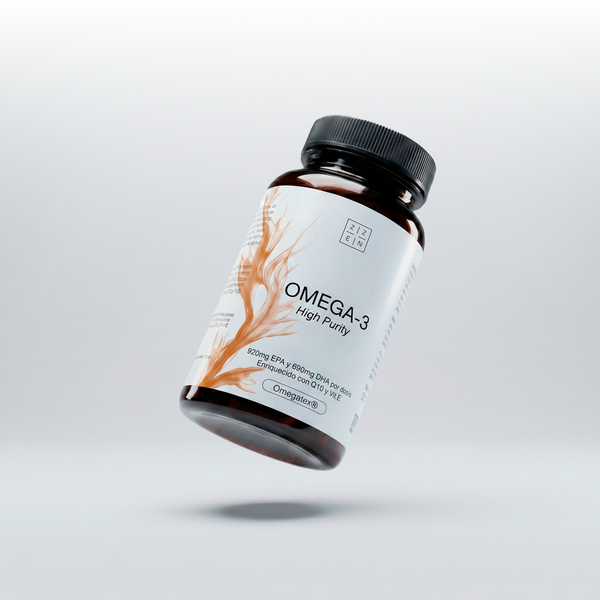
Table of contents
The best scientifically supported benefits of omega-3 for women relate to the heart, the maintenance of normal brain function and vision, and the baby's development during pregnancy and breastfeeding. Almost everything depends on two specific fatty acids, EPA and DHA, and not on omega-3 in general.
What it does for you depends on how much oily fish you eat, your stage of life and what you expect from a supplement. Here's what's proven, what isn't and how to choose one wisely if your diet falls short.
What omega-3 is and why it matters for women's health
Omega-3 is a family of polyunsaturated fats that the body doesn't make in sufficient amounts, so they have to come from the diet. It's worth distinguishing three:
-
ALA. Found in walnuts, chia and flax. The body only converts a small part of it into EPA and DHA.
-
EPA. Comes mainly from oily fish and shellfish.
-
DHA. Also comes from fish and forms part of the structure of the brain and the retina.
That's why you can eat walnuts and chia every day, more than cover your ALA and still fall short on EPA and DHA if you hardly eat any fish.
EFSA considers 250 mg of EPA+DHA a day an adequate intake for healthy adults and recognises that this amount contributes to the normal function of the heart. With oily fish several times a week, it's easy to reach. If you almost never eat it, it's hard.
Discover Omega-3 High Purity
The benefits of omega-3 for women at each life stage
Periods and menstrual pain
It's one of the most researched uses in young women. During your period, prostaglandins are released that are involved in uterine contractions, and EPA takes part in the pathways that regulate them.
Some studies have seen less pain after several months of continued use, but the trials are small and use very different amounts, so there's no dose that works for everyone. Take it as one more reason to look after your intake of oily fish, not as a solution. If your period stops you from going about your normal life, get it checked to rule out other causes.
Pregnancy and breastfeeding
This is one of the best-documented benefits. DHA builds up in the baby's brain and retina, especially in the last trimester, and then passes into breast milk. Maternal DHA intake contributes to the normal brain and eye development of the foetus and breastfed infant.
The main route is diet. The Spanish Agency for Food Safety and Nutrition (AESAN) recommends 3-4 portions of fish a week while planning a pregnancy, during pregnancy and while breastfeeding, with species such as sardines, anchovies, mackerel or salmon. It also advises avoiding swordfish, bluefin tuna, shark and pike because of their mercury content.
If you don't reach those portions or follow a vegetarian diet, the professional who monitors your care is the one who should decide whether you need a supplement, what kind and how much.
Menopause
As oestrogen falls, the cardiovascular risk profile changes and the heart becomes a real priority. The role of omega-3 is the same as in any adult, but it becomes more relevant: EPA and DHA contribute to the normal function of the heart. It doesn't relieve hot flushes or act on hormones, and its possible effects on memory, mood or muscle mass haven't been established.
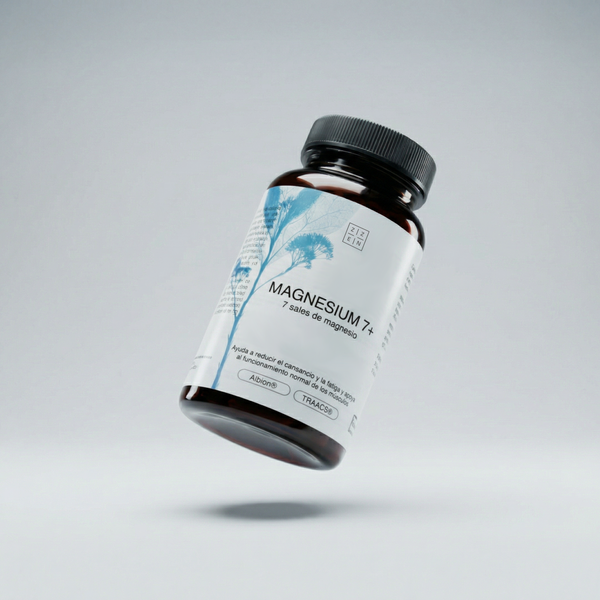
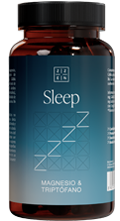
At this stage many women also review other basic nutrients. Magnesium contributes to the reduction of tiredness and fatigue and to normal muscle function. It doesn't treat menopause symptoms either, but a magnesium with several salts in a single formula fits well alongside omega-3. Magnesium 7+ combines 7 magnesium salts, is taken as 2 capsules a day and provides 67% of the NRV per daily dose. Each pack contains 60 capsules, for 30 days.
Discover Magnesium 7+
Which omega-3 benefits have the strongest support
Not everything attributed to omega-3 is equally solid:
-
Heart. This is the most established benefit: EPA and DHA contribute to the normal function of the heart with 250 mg a day.
-
Brain and vision. DHA contributes to the maintenance of normal brain function and normal vision with 250 mg a day. We're talking about maintaining normal function, not improving performance.
-
Baby's development. DHA taken by the mother contributes to the normal brain and eye development of the foetus and breastfed infant.
-
Under study. Menstrual pain, mood, skin or dry eye have mixed results. Today there's no basis for expecting specific changes in any of them.
If an omega-3 promises to balance hormones, get rid of anxiety or rejuvenate your skin, it's selling more than the evidence allows. Look at what it contains, not at what it promises.

Omega-3 | High Purity
29,90 € View Omega-3 | High Purity →Food first, and when to consider a supplement
The most direct way to cover EPA and DHA is to eat oily fish regularly. Sardines, mackerel and salmon over the course of the week already put you on the right track, and tinned fish in olive oil counts: a tin of sardines or mackerel is one of the most practical options.
If you don't eat fish, the ALA in walnuts, chia or ground flaxseed helps, but it doesn't replace EPA and DHA. The most direct plant sources are microalgae oils, which provide DHA and, depending on the product, EPA as well.
A supplement makes sense when your diet realistically falls short:
-
You eat oily fish very rarely or don't like it.
-
You're in perimenopause or menopause and want to look after your cardiovascular intake, but fish is scarce on your menu.
-
You train regularly, eat little fish and prefer to make sure you reach the daily reference for EPA and DHA.
Before starting, consult a healthcare professional if you take anticoagulants, have surgery coming up, are allergic to fish, are pregnant or breastfeeding or have any clinical condition.
How to choose an omega-3 that's worth it
Labels look very similar, but they differ quite a lot when you read them in detail. Check these points:
-
EPA and DHA per daily dose. Look for the milligrams of each in the full dose, not the total fish oil or the amount per softgel.
-
Chemical form. The triglyceride form is the one omega-3 naturally has in fish.
-
Third-party verified purity. An independent seal such as IFOS tests contaminants, oxidation and real concentration.
-
Simple regimen. If it requires lots of softgels spread over several doses, you'll find it hard to keep up.
Here's how it looks with our high-purity omega-3:
|
What to check |
Omega-3 High Purity |
|
EPA per daily dose |
920 mg |
|
DHA per daily dose |
690 mg |
|
Form |
OMEGATEX® triglycerides |
|
Purity control |
IFOS seal |
|
Label directions |
2 softgels with food |
|
Other ingredients |
100 mg of coenzyme Q10 and 40 mg of vitamin E |
In total that's 1,610 mg of EPA+DHA per daily dose, well above the general reference of 250 mg. Taking it with your main meal, ideally one with some fat such as olive oil, helps turn it into a habit. If you'd like to know how the products are formulated and reviewed, you'll find the details on the ZZEN Labs science and medical team page.
A well-planned essentials routine
Not all women need supplements, let alone several at once. If your diet is varied, includes oily fish and your energy is good, you may not need any.
When your diet falls short on more than one front, with little fish, few leafy greens and pulses or weeks of high stress, it's usually more practical to follow an organised routine than to keep adding individual products without a plan.
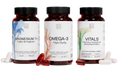
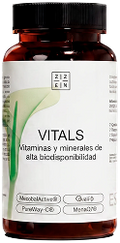
That's the idea behind the ZZEN Labs essentials pack: ZZEN Essentials brings together Vitals, Magnesium 7+ and Omega-3. It's convenient if you already know you want all three. If you're only missing omega-3, start with that alone.
Discover ZZEN Essentials
Summary: what omega-3 can do for you
EPA and DHA are what matter. Their most solid contribution is the normal function of the heart, which becomes more important in menopause, and DHA is key to the baby's development in pregnancy and breastfeeding. The rest is still being studied.
Oily fish comes first. If your diet falls short, choose an omega-3 with clear milligrams of EPA and DHA, in triglyceride form and with certified purity, and consider whether it fits with the rest of the ZZEN Labs essential supplements or whether it's enough on its own.
Frequently asked questions
What time of day is best to take omega-3?
Is the omega-3 in walnuts or chia as good as the one in fish?
Can omega-3 be taken together with magnesium and a multivitamin?
Do you need help with anything?
If you have any questions about anything you've seen, please contact our friendly support team.
Chat nowUnlock your discount
Subscribe and get your exclusive discount code.