








Ashwagandha for better sleep and waking up without exhaustion
Ashwagandha isn't a sleeping pill: it acts on stress and night-time cortisol. What it can bring to your rest, how long it takes to work and when to take it.
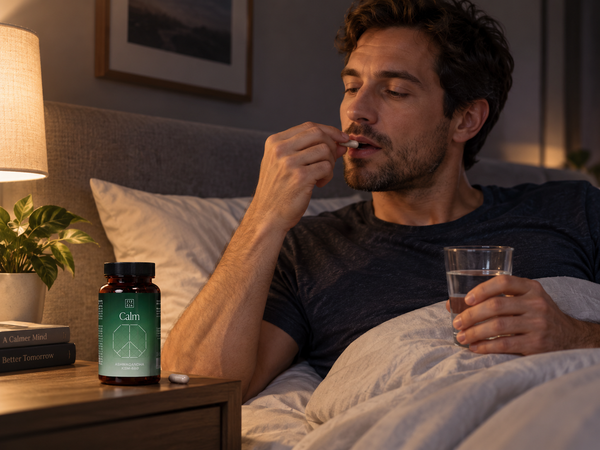
Table of contents
You've been waking up at three in the morning for weeks with your mind switched on, thinking about everything you have pending. Tiredness builds up, but sleep doesn't come when you need it. If this sounds familiar, you've probably already looked for natural solutions and the name ashwagandha has come up more than once. It's no coincidence: ashwagandha for sleep has been studied for its relationship with stress, the quality of rest and the ability to switch off, but it's worth understanding well what it can and can't offer before making any decision.
What ashwagandha is and why it has been used for thousands of years
Ashwagandha (Withania somnifera) is a plant native to the Indian subcontinent with a long tradition of use in Ayurvedic medicine. It's classified as a rasayana, a type of preparation associated with the general balance of the body. Its scientific name already gives a clue about its historical relationship with rest: somnifera comes from Latin and literally means «sleep-inducing».
The root is the most studied part and the one that concentrates its most relevant active principles, among them withanolides, a group of steroidal lactones to which a good part of its adaptogenic action is attributed. A plant being adaptogenic means it helps the body respond in a more balanced way to stressors, whether physical, mental or emotional. It doesn't push it in any specific direction: it regulates it.
Today it's grown mainly in India, Pakistan and some regions of North Africa, and its standardised extract is available in multiple formats. What's relevant is that, unlike other ingredients supported almost only by tradition, ashwagandha has clinical studies in humans that point to improvements in perceived stress, rest and subjective wellbeing when used consistently and at adequate doses.
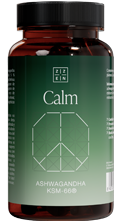
![[es] Nootrópico ZZEN Calm](http://zzenlabs.com/cdn/shop/files/Ingles01_2_copy.png?v=1778877108&width=600)
ZZEN CALM | Ashwagandha KSM-66
29,90 € View ZZEN CALM | Ashwagandha KSM-66 →Why ashwagandha works for sleep and isn't a conventional sedative
Here's the nuance that's most misunderstood: ashwagandha doesn't work like a sleeping pill. It doesn't cause immediate drowsiness or artificially suppress the nervous system. Its mechanism is more elegant and, in the long run, much more useful.
The problem behind insomnia in most modern adults isn't a lack of sleep in itself, but excessive activation of the stress axis. Cortisol, the main stress hormone, should be at its lowest level at night to allow melatonin to take over and facilitate deep sleep. When chronic stress keeps cortisol elevated during the afternoon and evening, the cycle breaks: the mind doesn't switch off, the body stays on alert and the sleep that comes is shallow and not very restorative.
Ashwagandha can help at that point because it has been researched for its role in the stress response and in cortisol regulation in certain profiles. By reducing background tension in people with sustained stress, the body may find it easier to move towards a state of relaxation compatible with falling and staying asleep.
In addition, some clinical research has observed improvements in sleep latency, sleep efficiency and the perception of rest on waking. This doesn't mean ashwagandha works equally for all cases of insomnia, but it does make it an interesting ingredient when the main problem is related to stress, mental activation or difficulty winding down at night.
Ashwagandha for stress and daily calm
How long ashwagandha takes to work if you take it before bed
One of the most frequent questions when someone starts taking ashwagandha is whether they'll notice anything from the first night. The honest answer is: probably, something. But the most significant results take time.
Taking ashwagandha before bed can produce a slight feeling of calm within the first few days, especially in people with a very activated nervous system. However, the real changes in sleep quality, in cortisol levels and in the ability to switch off consolidate between the third and sixth week of continuous use. This makes sense if you understand that adaptogens act by modulating complex physiological systems, not by blocking receptors immediately as a pharmacological anxiolytic does.
Consistency is, therefore, the most decisive factor. Skipping days breaks the accumulation of the adaptogenic effect. The most useful thing is to integrate it as part of a fixed night-time routine, just as you might with meditation, reading or any other practice that signals to the brain that it's time to slow down.
Practical tip: if you decide to take ashwagandha before bed, always do it at the same time and following the dose indicated by the manufacturer. That consistency helps turn the intake into part of a night-time routine, without depending on an immediate sensation the first night.
What science says about ashwagandha and sleep quality
Research on ashwagandha and sleep has grown in the last decade. One of the most cited trials, published in PLOS ONE, evaluated an ashwagandha root extract in adults with insomnia and observed improvements in parameters such as total sleep time, sleep efficiency and subjective quality of rest after several weeks of use.
Another important point is its tolerability profile in healthy adults when used within the recommended doses. Unlike hypnotic drugs, ashwagandha shouldn't be considered a sedative or a substitute for medical treatment. Its interest lies in supporting the stress response and promoting a more favourable context for rest.
Its tolerability is high when standardised extracts are used and within the recommended doses. People with autoimmune diseases, thyroid conditions or who take specific medication should consult their doctor beforehand, as with any active supplement.
How to combine ashwagandha with other habits to boost rest
Ashwagandha isn't a magic solution that works independently of everything else. Its potential multiplies when it's integrated into a context of coherent sleep hygiene. That said, it doesn't require a radical lifestyle transformation to start noticing its effects either.
Some combinations that science and clinical experience support:
-
Ashwagandha and a night-time relaxation routine. Taken before bed according to the product's directions, combined with quiet reading or diaphragmatic breathing, it can reinforce the signal to the nervous system that the day is over.
-
Ashwagandha and reduced screen exposure. The blue light from devices can make the transition to sleep harder. Reducing exposure in the last hour of the day and keeping a stable routine makes ashwagandha before bed make more sense within the whole.
-
Ashwagandha and body temperature. The body needs to slightly lower its core temperature to start deep sleep. A warm bath or a hot shower followed by a cool room, together with taking the supplement, can speed up that process.
-
Ashwagandha and consistent timing. Going to bed and getting up at the same time every day helps stabilise the circadian rhythm. Ashwagandha can accompany that process if rest is disrupted by stress, nervousness or excess mental activation.
What doesn't make sense is taking ashwagandha at night and at the same time consuming caffeine at six in the evening, having dinner very late or sleeping with your phone on the bedside table. The supplement can cushion part of the impact of stress, but it can't indefinitely compensate for the habits that generate it.
If your main goal is to sleep better, try ZZEN Sleep
Differences between taking ashwagandha in the morning or before bed
This is one of the most recurring debates among those who start using adaptogens. There's no single answer because it depends on the main goal.
|
Time of intake |
Main goal |
Expected effect |
|
In the morning |
Daily stress management and cognitive performance |
Less reactivity to stress, more mental clarity |
|
At midday |
Sustained hormonal balance |
Keeping cortisol stable during the day |
|
At night (30-60 min before bed) |
Sleep quality and restorative rest |
Reduction of night-time cortisol, better sleep latency and efficiency |
If your main goal is ashwagandha for sleep, taking it at night makes more physiological sense: it acts just when cortisol should be falling naturally and reinforces that transition towards the resting state. If you also want its benefits on daytime stress, some people choose to split the dose between morning and night, always respecting the manufacturer's directions.
What is important is not to take it on a completely empty stomach if you tend to have digestive sensitivity, since in some cases it can cause slight gastric discomfort. Taking it with a small snack or with plant-based milk usually solves this issue.
Ashwagandha within a nootropic formula designed for sleep
One of the most relevant advances in the field of natural supplements is the synergistic combination of ingredients that act on different pathways of rest simultaneously. Ashwagandha alone already has a measurable effect, but when it's formulated together with other compounds with their own evidence, the result can be qualitatively superior.
At ZZEN Labs we work on formulas from a logic of mental states: calm, focus, rest and daily balance. The philosophy behind this approach is not to force sleep, but to create better internal conditions for rest to happen more naturally and sustainably.
That's why it makes sense to differentiate between a formula focused on calm and stress, like ZZEN Calm, and a formula more oriented towards night-time rest, like ZZEN Sleep. The first is perfect when the problem is reaching the night with too much activation; the second, when you're looking for specific help for a more complete sleep routine.
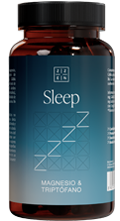
![[es] Bote ZZEN Sleep](http://zzenlabs.com/cdn/shop/files/Ingles01_3.png?v=1778877043&width=600)
ZZEN SLEEP | Tryptophan and GABA
29,90 € View ZZEN SLEEP | Tryptophan and GABA →Signs that ashwagandha is working on your rest
It isn't always easy to identify whether an adaptogenic supplement is taking effect, because the changes aren't dramatic or immediate. Here are some signs that the process is underway:
-
It takes you less time to fall asleep. Sleep latency is reduced progressively, without you noticing exactly when it started to happen.
-
You wake up fewer times during the night. Sleep interruptions decrease because the nervous system remains less reactive during the hours of rest.
-
On waking, you feel you've really rested. Not that feeling of having slept but not recovered. The difference is noticeable when slow-wave sleep improves.
-
During the day, your stress threshold is higher. Situations that used to destabilise you emotionally start to have less impact. This is adaptogenic action at work.
-
Your mind doesn't «race» as much when you go to bed. One of the most common symptoms of stress-related insomnia is so-called night-time mental noise. As cortisol regulates, that noise fades.
None of these changes happens overnight, but if after four or six weeks of consistent intake you don't perceive any improvement in any of these areas, it's worth reviewing the dose, the quality of the extract or whether there are other underlying factors that require professional attention.
For a complete rest, stress and focus routine, try Modo ZZEN
Ashwagandha can be a useful tool for those who want to look after their rest through stress management, as long as it's used consistently, with realistic expectations and within a coherent routine. Understanding how it works, when to take it and what to expect from it is the first step to using it well, not just trying it for a few days and discarding it. Deep sleep isn't a luxury: it's the foundation on which everything else rests.
Do you need help with anything?
If you have any questions about anything you've seen, please contact our friendly support team.
Chat nowUnlock your discount
Subscribe and get your exclusive discount code.


![[es] Pack suplementos Modo ZZEN](http://zzenlabs.com/cdn/shop/files/EsfromCastellano_1.png?v=1779288372&width=320)
![[es] Bote ZZEN Focus](http://zzenlabs.com/cdn/shop/files/Ingles01_1_3cc39391-b7c6-437c-a225-3e2599c2d82b.png?v=1778876969&width=320)
![[es] Bote ZZEN Sleep](http://zzenlabs.com/cdn/shop/files/Ingles01_3.png?v=1778877043&width=320)
![[es] Nootrópico ZZEN Calm](http://zzenlabs.com/cdn/shop/files/Ingles01_2_copy.png?v=1778877108&width=320)
![[es] Suplemento de magnesio](http://zzenlabs.com/cdn/shop/files/image_32efffc5-8b9f-410c-aa85-9b605d968109.png?v=1775459304&width=320)
![[es] Suplemento Omega-3](http://zzenlabs.com/cdn/shop/files/01-Es_a19d3712-8713-447c-892d-144f0b1af417.png?v=1781970960&width=320)


