










REM sleep: what it is, what it's for and how to boost it
Sleeping many hours doesn't guarantee your brain rests: what makes the difference is REM sleep. Discover what it is, what it's for and how to get more of it every night.

Table of contents
Sleeping the recommended hours doesn't guarantee that your brain truly rests. What makes the real difference in your mental performance, your memory and your mood is the quality of one specific stage: REM sleep. And most people don't even know it exists, or that they're losing it.
What REM sleep is and why it has that name
REM stands for Rapid Eye Movement. The name describes one of the most striking phenomena of this stage: the eyes move under the closed eyelids quickly and randomly, as if the brain were processing images at high speed. And, in a sense, that's exactly what happens.
REM sleep is the last stage of each night-time sleep cycle. Before reaching it, the brain goes through three non-REM stages: N1 or drowsiness, N2 or light sleep and N3 or deep sleep. Only after completing that path is REM reached. Each full cycle lasts between 90 and 110 minutes, and repeats four to six times per night. What changes with each repetition is the proportion: the first REM stages are brief, just 10 or 15 minutes, while the last ones can extend to 45 or 60 minutes. That's why the final hours of sleep, the ones many people sacrifice by setting the alarm too early, are the richest in REM.
In a young, healthy adult, REM sleep takes up approximately 25% of total sleep time. The remaining 75% corresponds to the non-REM stages. That proportion is a sleep-health indicator worth keeping in mind.
What happens in the brain and body during REM sleep
What happens in the body during this stage is, to say the least, paradoxical. Brain activity spikes to levels very similar to those of wakefulness. If you looked at the electroencephalogram of someone in REM sleep, the brain waves would be fast and low-amplitude, practically indistinguishable from those of an awake person. The brain, in other words, is working at full capacity.
However, and here's the paradox, the body is almost completely paralysed. The brainstem actively blocks the motor neurons, which produces a muscle atonia that prevents movement. This is not a system failure: it's a very clever protection mechanism. If the muscles weren't blocked, we would physically act out our dreams, with all the consequences that would entail. The only muscles that stay active are those controlling breathing and those that move the eyes.
It's precisely during REM sleep that the most vivid and intense dreams occur. The amygdala, the brain region linked to emotional processing, is especially active in this stage. The prefrontal areas, responsible for logical reasoning and executive control, reduce their activity. The result is that dreamlike state in which emotions take over and the dream narratives can be intense, strange or deeply meaningful.
What REM sleep is for: its essential functions
Understanding what REM sleep is for means understanding why the quality of rest matters as much as the quantity. This stage is not a biological luxury or filler space between more important stages. It has documented, critical functions for daily functioning.
Memory consolidation and learning. During REM sleep, the brain actively works to transfer the day's information from short-term memory to the long-term memory networks. Learned skills, assimilated concepts and lived experiences are consolidated and integrated during this stage. Sleep neuroscience studies have shown that people who sleep properly after learning something retain that information much better. Depriving someone of REM sleep is, in practice, like wiping part of the hard drive every night.
Emotional regulation. REM sleep acts as an emotional processor. During this stage, the brain reviews the day's experiences, especially the emotionally charged ones, and reframes them so that their emotional impact softens. It's a natural resilience mechanism. When REM sleep is reduced or interrupted chronically, the ability to manage stress, anxiety and negative emotions deteriorates noticeably. It's no coincidence that sleep deprivation affects mood so much.
Creativity and problem-solving. The REM brain state, in which memories are combined non-linearly and without the censorship of logical reasoning, favours unexpected connections between ideas. Many creative processes and solutions to complex problems are attributed to this state. The mind, freed from the rigidity of waking thought, can find paths that would otherwise remain closed.
Neurological development. In babies and children, REM sleep takes up a much larger proportion of total sleep time. This is not by chance: it's believed that this stage plays a fundamental role in the development and maturation of the central nervous system during the early stages of life.
Boost your rest with sleep nootropics
How long REM sleep lasts and how it's distributed through the night
The duration of REM sleep is not uniform throughout the night. It's a mistake to think this stage is spread evenly across the different cycles. The reality is that the amount of REM per cycle increases progressively as the hours of sleep go by.
In the first cycle, the REM stage may last just 5 to 10 minutes. In the second cycle it extends a little more. And by the third, fourth or fifth cycle, it can take up between 30 and 60 minutes continuously. This explains why the final hours of sleep are the richest in REM and why systematically cutting them has direct consequences on memory, emotional stability and cognitive performance.
In total, if you sleep 8 hours, you can expect between 90 and 120 minutes to be REM sleep. If you sleep only 6 hours, that amount can be reduced disproportionately, because it's precisely the last cycles, the ones most loaded with REM, that are eliminated.
| Sleep cycle | Approximate REM duration |
|---|---|
| Cycle 1 (first ~90 min) | 5-10 minutes |
| Cycle 2 (~180 min accumulated) | 15-20 minutes |
| Cycle 3 (~270 min accumulated) | 25-35 minutes |
| Cycle 4 (~360 min accumulated) | 35-50 minutes |
| Cycle 5 (~450 min accumulated) | 45-60 minutes |
These figures help to understand that sleeping 6 hours is not the same as sleeping 8. And that accumulating complete cycles is what guarantees sufficient, quality REM sleep.
Factors that reduce or block REM sleep
Knowing what harms REM sleep is as important as knowing how to boost it. There are several factors that interfere directly with this stage, some very present in today's lifestyle.
- Alcohol is one of the most underestimated enemies of REM sleep. Although it helps you fall asleep faster, it fragments the cycles and suppresses REM, especially in the first half of the night.
- Chronic sleep deprivation causes what is known as "REM rebound": when you finally sleep well, the brain tries to make up the deficit by increasing the proportion of this stage. But that rebound is never as efficient as regular, sustained REM sleep.
- Certain medications, especially some antidepressants and sleeping pills, can profoundly alter sleep architecture and reduce the time devoted to REM sleep.
- Sleep fragmentation, whether from sleep apnea, ambient noise or frequent interruptions, prevents the brain from completing the cycles needed to reach REM fully.
- Sustained stress and anxiety raise cortisol levels during the night, which makes it harder to enter the deeper sleep stages and therefore reduces REM.
- Exposure to screens and blue light before bed delays melatonin production, pushing back sleep onset and reducing the number of complete cycles you can finish.
How to boost REM sleep naturally
The good news is that REM sleep responds very well to habit changes. You don't need a complex solution: what the brain needs to reach this stage regularly are stable, consistent conditions that respect its biology.
Keeping a consistent sleep schedule is the most important starting point. The brain regulates its cycles through the circadian rhythm, and that rhythm depends on consistency. Going to bed and getting up at the same time, even on weekends, is the measure with the greatest proven impact on sleep quality.
Creating an environment suited to rest contributes directly. Complete darkness, a temperature between 17 and 19 degrees and silence or the use of white noise are variables that make it easier to progress naturally through the sleep stages without interruptions.
Reducing alcohol, caffeine and nicotine in the hours before sleep is essential if you want to protect REM. Caffeine has a half-life of between 5 and 7 hours, which means a coffee at 5 pm is still active at midnight.
Managing stress during the day so it doesn't carry over into the night is another fundamental pillar. Techniques such as diaphragmatic breathing, meditation or regular physical exercise help lower evening cortisol levels and make sleep deeper and more continuous.
PRO TIP: If you want to maximise your REM sleep, prioritise completing whole sleep cycles: waking up after a multiple of 90 minutes (such as 6 or 7.5 hours) usually results in a more natural transition with a higher proportion of accumulated REM.
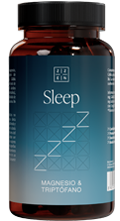
Natural nootropics also play a relevant role in this context. Some plant-based compounds and specific formulations act on the mechanisms that regulate sleep, favouring relaxation of the nervous system, reducing mental activity before sleep and contributing to a more orderly sleep architecture. At ZZEN Labs we work with science-backed formulas precisely to support this kind of process, from focus to deep rest, naturally and without compromising the quality of REM sleep.
![[es] Bote ZZEN Sleep](http://zzenlabs.com/cdn/shop/files/Ingles01_3.png?v=1778877043&width=600)
ZZEN SLEEP | Tryptophan and GABA
29,90 € View ZZEN SLEEP | Tryptophan and GABA →
REM sleep disorders worth knowing about
Not all REM sleep disturbances are trivial. There are specific medical conditions linked to this stage that deserve attention when symptoms are persistent.
REM sleep behaviour disorder occurs when the muscle-atonia mechanism fails. Instead of staying paralysed, the person begins to physically act out their dreams: they talk, move, gesture or may even get out of bed. It's more common in men over 50 and in some cases can be an early sign of neurodegenerative diseases, so it requires medical evaluation.
Recurrent nightmares also occur during REM sleep, precisely because it's the stage in which dreams are most intense and emotionally charged. When nightmares are frequent and interfere with rest, they can indicate high levels of stress, anxiety or unprocessed trauma.
Narcolepsy is another REM-linked disorder: in this case, the brain enters REM sleep directly at the start of the cycle, without going through the previous stages, causing episodes of extreme daytime sleepiness and, in some cases, cataplexy (sudden loss of muscle tone).
REM sleep as an investment in mental performance
We live in a culture that glorifies productivity and penalises rest. But neuroscience is clear: REM sleep is not wasted time. It's the moment when the brain consolidates what you've learned, regulates how you feel and prepares to face the next day with the capacity to reason, create and connect ideas.
Every night you don't complete enough sleep cycles, you don't just accumulate tiredness. You're eroding your memory, your emotional balance and your ability to think clearly. And that debt isn't cancelled with a long weekend: REM sleep deficit has measurable cognitive effects that persist even when the feeling of tiredness disappears.
Taking care of your REM sleep is, ultimately, one of the smartest decisions you can make for your long-term performance. It doesn't require sophisticated technology or big investments. It requires consistency, well-chosen habits and, when needed, the support of natural formulations designed to respect and boost what your brain already knows how to do.
Improve your REM sleep with ZZEN Sleep
Do you need help with anything?
If you have any questions about anything you've seen, please contact our friendly support team.
Chat nowUnlock your discount
Subscribe and get your exclusive discount code.


![[es] Pack suplementos Modo ZZEN](http://zzenlabs.com/cdn/shop/files/EsfromCastellano_1.png?v=1779288372&width=320)
![[es] Bote ZZEN Focus](http://zzenlabs.com/cdn/shop/files/Ingles01_1_3cc39391-b7c6-437c-a225-3e2599c2d82b.png?v=1778876969&width=320)
![[es] Bote ZZEN Sleep](http://zzenlabs.com/cdn/shop/files/Ingles01_3.png?v=1778877043&width=320)
![[es] Nootrópico ZZEN Calm](http://zzenlabs.com/cdn/shop/files/Ingles01_2_copy.png?v=1778877108&width=320)
![[es] Suplemento de magnesio](http://zzenlabs.com/cdn/shop/files/image_32efffc5-8b9f-410c-aa85-9b605d968109.png?v=1775459304&width=320)
![[es] Suplemento Omega-3](http://zzenlabs.com/cdn/shop/files/01-Es_a19d3712-8713-447c-892d-144f0b1af417.png?v=1781970960&width=320)


