









The term Deep Work has become one of the most relevant ideas in modern productivity. It is not just another trend or method: it is a response to a real problem. We live in an environment where attention is easily fragmented. Notifications, emails, screens, open tabs, messages, interruptions... everything competes for space in our brains.
At ZZEN Labs, we believe that mental clarity does not happen by accident. It requires intention, structure, and an environment prepared for noise-free performance. Deep Work is just that: create the conditions for better thinking, producing quality work and achieving a level of concentration that we rarely find by chance.
Table of contents
What is Deep Work?
The concept was formulated by Cal Newport, a professor at Georgetown University, to describe a state of deep work: devote yourself to a single task with complete attention, without interruptions and without multitasking, for a specific block of time.
It is not about doing more things in less time. It is about creating the necessary conditions for the mind to work at its highest level, without friction.
Deep Work enables:
- produce more with fewer iterations
- think clearly
- solve complex problems
- get into the flow
- deliver higher quality work
- avoid constant dispersion that exhausts without progressing
It is a practice, not a talent. And like any deliberate habit, it can be trained.
Why is it so difficult to get into Deep Work?
Our minds are designed to seek out what is easy and immediate. At the slightest obstacle—an email, a message, a sudden idea—we tend to switch tasks. This weakens our ability to stay focused and turns us into reactively distracted workers.
The main reasons:
1. Digital overload: Each notification triggers a dopamine microcycle that fragments attention.
2. Multitasking disguised as productivity: Switching tabs is not working harder: it is multiplying cognitive restarts.
3. Absence of specific objectives: Without something to deliver, the mind wanders. 4. Environments without rules: Without rituals or prior preparation, concentration depends on willpower, and willpower is finite.
Deep Work corrects these factors: organise the environment, define the objective and eliminate competing stimuli.
How to practise Deep Work (the ZZEN methodology)
Based on the official recommendations of the creator of the concept and the carousel structure you shared, here is a clear, practical, and sustainable method for your daily life:
1. Prepare the environment
Before you begin, clear your desk, have water nearby, minimise your screen to the bare essentials, put your devices in airplane mode, play music without lyrics or remain silent, and close the door or inform others that you are going to concentrate.
Because it's not just about ‘ordering’: is to create a ritual to reduce friction and facilitate starting.
2. Define the objective in one sentence
What should you hand in at the end of the session?
Perhaps it is a draft, an analysis, an outline, a technical solution... If you cannot write your objective in a single sentence, it means that it is not yet clear.
3. Work in blocks of 50-80 minutes
We chose this range because it is where the mind can work at a deep level without premature fatigue.
Set a visible timer, try to avoid interruptions, and take a 10–15 minute break when you finish.
During the break, you can stretch, breathe, move around... But DO NOT open social media. Because the break is for resetting, not for distracting yourself.
4. Start without friction
The first 90 seconds are crucial.
So we recommend you do this:
1. Take five deep breaths.
2. Read your goal aloud.
3. Open the document or tool.
4. Start with a simple gesture: a sentence, a diagram, a calculation.
The imperfect draft is the bridge to the good version.
5. Manage interruptions with a notebook
During the session, ideas, pending tasks, and emails that ‘cannot wait’ will pop up. Write all of these down in a notebook and deal with them later.
If something seems urgent, ask yourself: ‘Can't you really wait an hour?’ 90% of interruptions are not real problems: they are habits.
6. Close and measure
When you finish, we recommend analysing the session, noting the effective minutes, recording all interruptions, checking whether you met your goal, and writing down the next step for the next session.
This 2-minute debrief turns consistency into real progress.
7. Keep your muscles strong
Concentration improves like any other skill: with deliberate practice and favourable conditions.
Sleeping well, eating simply, training, staying hydrated... these things help more than any isolated trick. If one day doesn't go well, it's no big deal: try again tomorrow.
Supplements and Deep Work: a support, not a shortcut
At ZZEN Labs, we believe in realistic productivity: not based on overstimulation, but on clarity.
Supplements are not a substitute for concentration habits, but they can be a useful aidin maintaining sustained focus and reducing mental overload.
In this context:
ZZEN Focus: It is ideal for deep sessions. Formulated with caffeine + L-theanine + Bacopa + Ginkgo + Rhodiola + Panax Ginseng in doses designed to provide clarity without spikes.
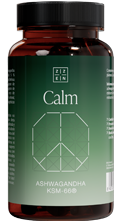
ZZEN Calm: It is useful if difficulty concentrating stems from anxiety, mental noise, or excessive rumination.
ZZEN Sleep: It is essential because without deep rest, Deep Work is impossible.
And no, we're not talking about shortcuts. We're talking about tools that, when used wisely, help sustain a habit that requires mental discipline.
Conclusion: Deep Work is not a technique; it is a decision
Deep Work means returning to a way of working that respects concentration. A clear environment.
A specific objective.
A block of time without noise.
A conscious closure.
Repeat.
And like any human skill, it improves with practice.
In a world full of interruptions, Deep Work is not only a competitive advantage: it is an act of responsibility towards oneself.




Leave a comment
This site is protected by hCaptcha and the hCaptcha Privacy Policy and Terms of Service apply.