

Omega 3 for the skin: how it fits into a beauty routine from within
Your skin also depends on what nourishes it from within. Discover how omega 3 strengthens the skin barrier, calms inflammation and slows ageing.

Table of contents
A good topical routine helps, but there's a part of skincare that starts earlier: the nutrients that reach every cell. When we talk about omega-3 for the skin, we're talking about a key nutrient to care for the skin barrier, modulate inflammation and support skin health from within.
And yet, many beauty routines still leave it out.
This article explains what exactly omega-3 does in your skin, why an insufficient intake can show up sooner than it seems, and how to integrate it intelligently into a beauty routine that actually works, not just on the surface.
Why omega 3 is key for skin health
The skin is the body's largest organ and, like any organ, it depends on the nutrients circulating inside to work well. What happens in the epidermis is, to a large extent, a reflection of what happens inside you: the state of your cell membranes, the level of systemic inflammation and your body's ability to regenerate tissue.
EPA (eicosapentaenoic acid) and DHA (docosahexaenoic acid) are the two most biologically active omega-3 fatty acids. When you consume them, they are incorporated directly into the membranes of skin cells, modifying their composition and regulating fundamental processes such as the production of inflammatory molecules, the permeability of the skin barrier and the speed of healing. It's not a cosmetic promise: it's a well-documented nutritional mechanism.
An insufficient omega-3 intake can show in the skin in recognisable ways: persistent dryness, a tendency to redness, dull skin, greater sensitivity to irritation and a slower-than-normal recovery. If you recognise any of these signs, it's worth reviewing whether omega-3 has enough weight in your diet.
What does omega-3 do in the skin at the cellular level?
Understanding omega-3's mechanism of action in the skin helps to value it for what it really is: an active ingredient that acts from within. It doesn't coat the surface like a serum. It acts on the deep structure.
The anti-inflammatory effect is its most studied and most relevant role for the skin. EPA and DHA reduce the production of pro-inflammatory cytokines such as TNF-α and interleukin-1β, the molecules responsible for the skin reacting in an exaggerated way to external or internal stimuli. That's why EPA and DHA have been studied as nutritional support in skin prone to acne, atopic dermatitis, psoriasis or eczema, always within an appropriate routine and with professional judgement when there is a condition. We're not talking about replacing a dermatological treatment, but about strengthening the nutritional base that can influence the skin's response.
The skin barrier is another critical point of action. This barrier, made up of layers of lipid cells, is what prevents water from evaporating from the skin and blocks the passage of external irritants. When the body lacks essential fatty acids, this barrier weakens: the skin loses water more easily, becomes more permeable to irritants and more prone to reactions. Omega-3 reinforces that barrier by acting as a structural component of the cell membranes that form it.
Photoprotection from within is perhaps the least known benefit. Some studies have observed that an adequate intake of EPA and DHA can help modulate the skin's inflammatory response after sun exposure. This doesn't replace sunscreen or a dermatological plan, but it can complement a well-designed care routine.
Omega 3 and skin ageing: the connection few routines take into account
Skin ageing has two great enemies: low-grade chronic inflammation (sometimes called inflammaging) and oxidative stress. Omega-3 acts on both fronts.
Low-grade chronic inflammation is that silent state in which the immune system is permanently active at a level that produces no obvious symptoms, but which, over time, destroys collagen, accelerates the appearance of wrinkles and generates spots. Omega-3, by modulating the inflammatory cascade, reduces that baseline state of inflammation and, with it, the rate at which the skin ages from within.
Oxidative stress, in turn, directly damages skin cells, deteriorates collagen and elastin and promotes changes in cellular DNA that in the long term increase susceptibility to skin tumours. The active derivatives of marine omega-3 have antioxidant properties that help neutralise those free radicals before they cause structural damage.
The practical result of all this is skin that can better preserve firmness, maintain natural hydration and respond more calmly to external aggressions such as the sun, cold or pollution. It's not a visible effect overnight, but with consistent supplementation over several weeks you may start to notice changes in texture, tone and radiance, always depending on diet, consistency and starting point.
See the Omega-3 formula with EPA, DHA, CoQ10 and vitamin E
Concrete benefits of omega-3 for common skin conditions
Beyond preventive and anti-ageing care, omega-3 has been studied for its supporting role in some common skin conditions. These are the areas with the most literature:
- Acne. Omega-3 has been studied as nutritional support in acne-prone skin for its role in modulating inflammation and balancing sebum. It doesn't replace a dermatological plan, but it can be part of a more complete strategy.
- Atopic dermatitis. In skin prone to dryness, itching or flaking, the intake of essential fatty acids can help reinforce the skin barrier. In diagnosed cases, any supplementation must fit with professional monitoring.
- Psoriasis. The scientific literature has explored the role of omega-3 as a complement in care and treatment routines, above all for its relationship with the inflammatory response. The key is to understand it as support, not as a single solution.
- Slow skin recovery. EPA and DHA take part in processes related to tissue regeneration and the inflammatory response, two important factors when the skin is slow to recover. If there are chronic wounds or persistent problems, always consult a healthcare professional.
- Dry, reactive skin. Even without a diagnosed condition, dryness that doesn't respond well to topical moisturisers may also have a nutritional component. In those cases, reviewing omega-3 intake helps work on the skin barrier from within.
How to integrate omega 3 for the skin into a real beauty routine
An effective beauty routine has two layers: the external one, with the products you apply on the skin, and the internal one, with the nutrients that reach the cells through diet and supplementation. Many people work only on the first layer and then wonder why the results are limited.
Integrating omega-3 into your routine doesn't require big changes. These are the practical keys to doing it well:
- Choose a source of EPA and DHA, not just ALA. The plant-based omega 3 present in walnuts or flax seeds (ALA) is a precursor, but the human body converts it into EPA and DHA with very low efficiency. For omega-3 to have a real effect on the skin, you need the active forms: EPA and DHA, from fish oil or microalgae. If you want to reinforce the dietary part of the routine, you can also check which omega-3 foods fit best into your day to day.
- Go for purity and concentration. Not all supplements are the same. A high-purity supplement, with clear EPA and DHA concentrations, helps you know how much active amount you're taking and avoids non-transparent formulas.
- Take it with your main meal. Omega-3 is absorbed much better in the presence of dietary fats. Taking it with a main meal notably improves its bioavailability. To adjust timing and consistency, this guide on how to take omega-3 can serve as practical support.
- Be consistent for at least three months. The skin renews itself in cycles of approximately 28 days, but the changes derived from omega-3 supplementation accumulate over time. The most evident results in texture, hydration and inflammatory response are seen from 8-12 weeks of continued intake.
- Combine it with your topical routine, not instead of it. Omega-3 from within and care products from outside don't compete: they complement each other. Omega-3 strengthens the skin barrier and reduces underlying inflammation; the moisturiser or serum act on the surface. The two levels of action together give results that neither reaches on its own.
Practical tip: take your omega-3 supplement with breakfast or the midday meal, when more natural fats are usually consumed, to improve its absorption and keep a stable routine day to day.
What to look for in an omega-3 supplement to care for the skin from within
The quality of the supplement you choose makes a real difference. Not all fish oils on the market are equivalent: the concentration of EPA and DHA varies enormously between brands, and the absence of adequate purification processes can leave traces of contaminants or cause oxidation of the oil, which reduces its effectiveness and can generate that unpleasant fishy taste many people associate with this type of supplement.
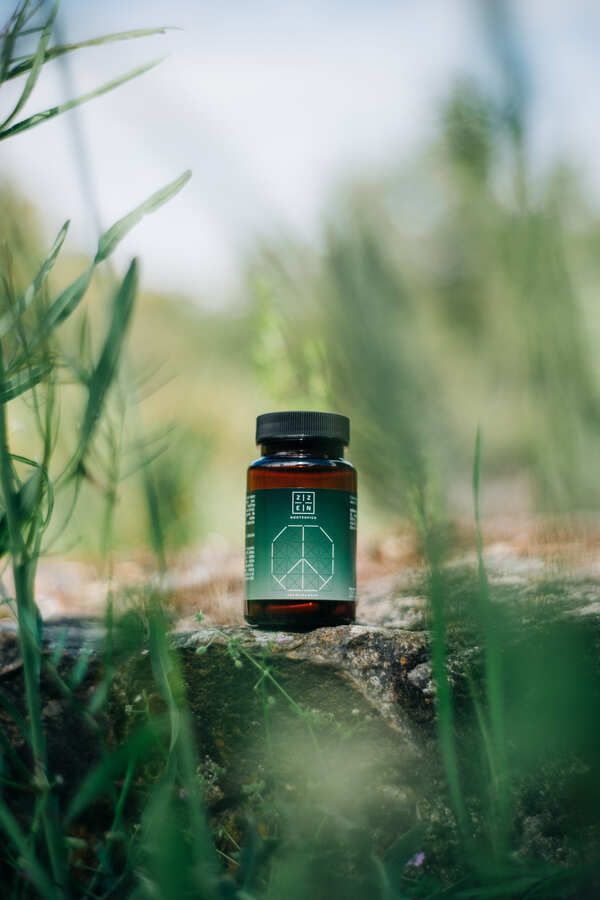
A high-purity omega-3 supplement, with clear EPA and DHA concentrations and formulated with technical criteria, can make the difference in the consistency and quality of supplementation. At ZZEN Labs we've developed a clean, practical formula, designed for those who understand that skin wellbeing starts long before reaching the mirror.
ZZEN Labs' Omega 3 supplement concentrates EPA and DHA in a formula with CoQ10 and vitamin E, with no unnecessary fillers and designed both for skincare and for the general wellbeing of the body. Because the skin you see on the outside also reflects what you take care of on the inside.
Discover ZZEN Labs' Omega-3
How to know if your skin needs more omega-3
There are signs the skin sends when omega-3 levels aren't sufficient and that are easy to misinterpret as simple cosmetic problems. Dryness that doesn't improve with any cream, a tendency to redness with no apparent cause, skin that is slow to recover after a sunburn or a small wound, adult acne that doesn't respond to the usual topical treatments... all of these are signs that something isn't right at an internal level.
Identifying them in time lets you act before the insufficient intake persists over time. If you recognise several of these patterns in your skin, it's worth reviewing your usual omega-3 intake and considering whether supplementation could be the missing piece in your wellbeing routine.
Beauty from within doesn't have to stay a marketing phrase. It's a practical way of understanding that the skin also depends on what it receives nutritionally, not just on what you apply on the surface. Omega-3 is, in that sense, one of the most interesting nutrients to integrate into a modern, well-judged beauty routine.
Do you need help with anything?
If you have any questions about anything you've seen, please contact our friendly support team.
Chat nowUnlock your discount
Subscribe and get your exclusive discount code.