





Procrastination: why it happens and how to regain focus
Procrastination isn't a lack of discipline: it's emotion management. What happens in your brain when you put things off and which strategies work to regain focus.

Table of contents
There are tasks that sit on your list for days, sometimes weeks. You see them. You know they're important. And yet you find a thousand reasons not to start. That isn't a lack of discipline or laziness: it's procrastination, a deeper and more common phenomenon than it seems, with concrete explanations in neuroscience and behavioural psychology.
Understanding why it happens is the first step to stop fighting against yourself and start working in your own favour.
What procrastination actually is
Procrastination isn't simply «leaving things for later». It consists of deliberately postponing important tasks despite having the opportunity and the resources to do them, generating an emotional load that builds up over time. It isn't a time-management problem: it's an emotion-management problem.
When a task triggers feelings of anxiety, boredom, frustration or uncertainty, the brain looks for an escape towards activities with immediate reward. Checking your phone, reorganising your desk, making another coffee. The relief is momentary, but the task is still there, now with the added weight of guilt for not having done it sooner.
This cycle perpetuates itself. The more time passes, the harder it becomes to break, because the emotional load associated with the task grows.
Why we procrastinate: what happens in the brain
The human brain operates with two systems that frequently come into conflict. On one side, the limbic system, in charge of emotions and the search for immediate pleasure. On the other, the prefrontal cortex, responsible for planning, long-term decision-making and impulse control. Procrastination happens when the limbic system wins the game.
When you anticipate a difficult or unpleasant task, the amygdala generates a threat response. Your brain interprets that task as a risk (of failing, of making a mistake, of not measuring up) and activates avoidance mechanisms. It isn't irrationality: it's a self-protection response that made sense in another evolutionary context.
The problem is that this avoidance response, in the context of intellectual work, only makes things worse. The more you avoid, the more the association between the task and the discomfort is reinforced, and the more powerful the resistance becomes. Procrastination, in this sense, behaves like a self-reinforcing neurological habit.
Procrastination isn't the problem: it's the symptom. The real problem is the emotion the task triggers.
The three types of procrastination worth telling apart
Not all procrastination is the same, and recognising which one you fall into helps you tackle it with the right strategy. There are three main types.
Procrastination through paralysis in the face of a big task
It happens when the project is so ambitious or so undefined that the mind doesn't know where to start. The way out isn't to get more motivated, but to shrink the first step until it's absurdly small: open the document, write one sentence, list three subtasks.
Procrastination through perfectionism
Here you don't start because the imagined result is impossible to achieve. The fear of doing something «wrong» paralyses more than the actual difficulty of the task. This variant is especially tricky because it disguises itself as high standards.
Hidden or type B procrastination
This is the most dangerous. You keep yourself busy all day (answering emails, attending meetings, completing minor tasks), but you systematically avoid the work that really matters. Everything looks productive from the outside, but the priority task never moves forward.
Identifying which of these patterns dominates your behaviour lets you choose the right strategy instead of applying generic solutions.
The role of dopamine and immediate reward
One of the central mechanisms of procrastination is the bias towards immediate reward. The brain values a small reward now far more than a big reward in the future. This is called hyperbolic temporal discounting, and it's a universal trait of human cognition.
When a task offers a long-term reward (finishing a project, reaching a goal, mastering a skill), the brain perceives it as abstract and not very motivating. In contrast, when you check social media or reply to a message, dopamine spikes immediately. The reward circuit is satisfied, even though nothing important has moved forward.
Understanding this mechanism makes it possible to design environments and routines in which important tasks compete on equal terms with distractions. It's not about having more willpower, but about reconfiguring the reward system.
Signs that procrastination has got out of hand
Before talking about strategies, it's worth recognising when the pattern has gone from occasional to settling in as a way of functioning. Some signs:
-
You finish the day feeling you've been busy, but without having moved forward on what matters.
-
There's a specific task you've been putting off for more than a week and that emotionally conditions your day.
-
You sleep worse from thinking about what you haven't done.
-
You look for distractions every time you sit down to work on something demanding.
-
You postpone even small tasks (replying to a message, booking an appointment, dealing with paperwork) until they become urgent.
If several of these signs sound familiar, the approach has to go beyond «trying harder»: it requires working on habits, environment and, very often, rest and internal state.
Strategies to break the procrastination cycle
Fighting procrastination doesn't require a personality transformation. It requires concrete techniques that change your brain's relationship with tasks. These are the ones with the most scientific and practical backing.
Reduce the friction of starting
The biggest obstacle in any task isn't its real difficulty, but the perceived cost of starting. The most effective technique is to define the next step in terms so small that it's impossible to say no. Not «finish the report», but «open the document and write the first paragraph». Once underway, cognitive inertia works in your favour.
This principle connects with what researchers call the Zeigarnik effect: the brain remembers and generates tension around incomplete tasks, but that same tension becomes momentum once you've begun. Starting, even in a small way, changes the emotional equation completely.
Work in time blocks with structured breaks
Trying to concentrate for hours on end without a break isn't productivity: it's exhaustion disguised as effort. The human brain maintains an optimal level of concentration for limited periods, after which performance drops and procrastination spikes as an escape mechanism.
The solution is to plan blocks of intense work of 25 to 50 minutes, followed by breaks of 5 to 10 minutes. This structure respects the natural cycles of attention and prevents cognitive fatigue before it appears. Over time, you can extend the length of the blocks according to your real capacity for sustained concentration.
A useful rule: start each day with the most demanding task, when your mental energy is at its highest, and leave the tasks with lower cognitive demand for the last hours.
Design routines that remove daily friction
Routines aren't the enemy of creativity: they're its best ally. When certain behaviours become automatic (a start-of-day ritual, a fixed time to check email, a preparation sequence before working) the mind stops spending energy on deciding when and how to do each thing, and can devote that energy to what really matters.
A well-designed routine reduces the decision load to zero at the most vulnerable moments of the day. You don't have to decide whether to start or not: the sequence decides for you. That automation is exactly what a brain prone to avoidance needs.
If you want to take this work to a more structured level with support, the 30-day ZZEN personal challenge is designed precisely to build habits of focus, calm and rest progressively, without depending on peaks of motivation.
Order tasks by real impact
Endless to-do lists are another form of hidden procrastination. When everything appears urgent, nothing really is. A more useful tool is to identify, every day, a single high-impact task that, if you complete it, truly changes the state of things. The rest can wait or be delegated.
This logic forces an uncomfortable but necessary question: are you working on the most important thing you could be working on right now? If the answer is no, whatever level of activity you keep up is still, deep down, a form of avoidance.
Work on the environment before willpower
Willpower is a finite resource. The environment, on the other hand, works silently all day. If your phone is out of sight, you spend less time looking at it. If notifications are silenced, they interrupt you less. If you have a desk dedicated only to work, the brain associates that space with focus.
Designing the environment so that the easy option is the right one is far more effective than relying on discipline in every isolated decision.
How procrastination affects cognitive performance
Procrastination doesn't only have a cost in productivity: it has a real neurological cost. The state of sustained postponement generates a load of low-intensity chronic stress that, over time, can affect key cognitive functions such as working memory, decision-making and the capacity for sustained attention.
When the mind continuously carries pending tasks, part of its cognitive resources stays busy in the background processing that debt. It's what some researchers call open loops: unresolved commitments that consume mental energy even when you're not actively thinking about them. The result is a persistent feeling of overload and difficulty concentrating, even when objectively you aren't doing anything.
Closing those loops, whether by completing the tasks, delegating them or consciously discarding them, frees up cognitive resources immediately. The mind regains clarity and the capacity to focus in a way that can feel almost physical.
The role of sleep, stress and nutrition
Before thinking about supplementation, it's worth reviewing the foundations. A brain that sleeps badly procrastinates more. A brain under sustained stress usually finds it harder to keep focus. A poorly nourished brain procrastinates more. These aren't minor details: they condition the capacity for attention and self-control.
How sleep affects it
Lack of sleep reduces prefrontal control and increases impulsivity, two perfect ingredients for avoidance. If you sleep badly, looking after your rest with sleep hygiene habits (stable schedules, dim light at night, less screen time before bed) and, if it fits, with support such as ZZEN Sleep, can be a more useful first step than trying to compensate with willpower alone.
How stress affects it
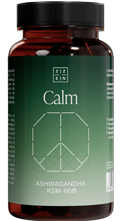
A nervous system in constant alert goes into survival mode, not focus mode. Breathing techniques, daily movement, time outdoors and, when it makes sense, adaptogens such as the ashwagandha in ZZEN Calm can support stress regulation without sedating.
What impact good nutrition has
Deficits in basic nutrients (magnesium, omega-3, B-group vitamins) are associated with fatigue, irritability and a lower capacity for concentration. Covering that base with real food and, if needed, with supports such as Magnesium +7 or Omega-3, puts the brain in better conditions to work.
None of this replaces habits, rest or, when necessary, therapy. But ignoring the physiological base and trying to solve procrastination only with lists and techniques is working against your own body.
Natural nootropics and concentration: support from biochemistry
Beyond behavioural strategies, there's another level at which procrastination acts: the neurochemical state of the brain. A brain with suboptimal dopamine levels, under sustained stress or with an attention capacity diminished by accumulated tiredness tends to procrastinate more, not for lack of character, but because of biochemistry.
This is where natural nootropics can help. Compounds such as L-theanine, Rhodiola rosea or caffeine from natural sources have been studied for their possible effect on the systems of attention, motivation and stress management, supporting more favourable internal conditions for maintaining focus.
ZZEN Focus is formulated with this goal in mind. It combines natural caffeine, L-theanine and Rhodiola, among other ingredients, to support sustained concentration while trying to avoid the energy peaks and crashes that usually feed procrastination. It doesn't replace sleep, nutrition or habits, but it can fit in when you need to perform consistently, not just on good days.
Building the habit of not procrastinating in the long term
Procrastination isn't overcome with a one-off burst of willpower. It's worked on systematically, building habits and environments that reduce its appearance and improve your ability to respond when it does appear. This involves three levels of intervention.
-
Cognitive level. Recognising the thought patterns that trigger avoidance (perfectionism, catastrophising, all-or-nothing thinking) and actively questioning them. Here reading, honest dialogue with yourself and, when applicable, therapeutic support are key tools.
-
Behavioural level. Establishing routines, reducing the friction of starting and structuring time in blocks that respect the physiology of attention.
-
Biochemical level. Supporting brain performance with nutrition, quality rest and, when it makes sense, science-based supplementation.
The three levels reinforce each other. Improving in one makes progress in the other two easier. Over time, what used to require conscious effort becomes the default way of functioning.
If you want to cover these three fronts at once (focus during the day, calm in the face of stress and rest at night), the Modo ZZEN pack with focus, calm and rest brings together the three pillars designed to work together.
When to seek professional help
If procrastination comes with persistent anxiety, emotional blockage, prolonged low mood, significant attention difficulties or seriously affects your work, studies or relationships, the useful thing isn't another productivity trick: it's consulting a mental health professional. Some avoidance patterns have clinical conditions behind them (anxiety, depression, ADHD) that require diagnosis and a specific approach. No habit or supplement replaces that assessment.
The goal isn't to eliminate procrastination forever. The goal is that, when it appears, you have the tools and the internal conditions to overcome it without drama. That capacity can be trained, and it starts with understanding exactly what happens when you procrastinate.
Do you need help with anything?
If you have any questions about anything you've seen, please contact our friendly support team.
Chat nowUnlock your discount
Subscribe and get your exclusive discount code.