



What micronutrients are and why your body can't live without them
They provide no calories, but without them nothing works. Discover what micronutrients are, their types and why their deficiency is more common than you think.

Table of contents
We know we need to "eat well", but it's not always clear what that means nutritionally. And this is where micronutrients come into play: the compounds that don't generate energy on their own, but take part in the body's basic processes. They influence how the metabolism, the nervous system, daily energy and recovery work.
Understanding what micronutrients are is the first step to making smarter decisions about your diet and the supplements you choose. And if you're interested in optimising your mental and physical performance, this knowledge is a good foundation.
The difference between macronutrients and micronutrients
To properly understand what micronutrients are, it helps to start with the most basic contrast in nutrition: macronutrients vs. micronutrients. Both are essential nutrients, but they perform different functions within the body.
Macronutrients (carbohydrates, proteins and fats) are the major providers of energy. Your body needs them in considerable amounts to generate the fuel that moves every muscle, feeds every thought and sustains every vital function. They are the main source of energy.
Micronutrients, on the other hand, don't provide calories. They aren't the fuel: they take part in the processes that allow that energy to be used correctly. Vitamins, minerals, trace elements and other bioactive compounds act as enzymatic cofactors, metabolic regulators and cellular messengers. They are needed in much smaller amounts —hence the prefix "micro"—, but their role in health is significant. The absence of a single essential micronutrient can trigger chain dysfunctions that affect everything from the immune system to cognition.
| Macronutrients | Micronutrients | |
|---|---|---|
| Examples | Carbohydrates, proteins, fats | Vitamins, minerals, trace elements |
| Main role | Energy source (calories) | Metabolic regulation and cellular functions |
| Amount needed | Large (grams) | Small (milligrams or micrograms) |
| Does the body produce them? | Partly | Generally no (must be ingested) |
| Essential? | Yes | Yes |
This table sums up the contrast, but the reality is richer: micronutrients aren't a uniform group. They are a broad family with members that are very different from one another.
Types of essential micronutrients for health
When we talk about micronutrients that are truly indispensable, we're referring to several well-differentiated categories. Each has its own structure, food source and specific functions within the body.
Vitamins and their functions in metabolism
Vitamins are organic compounds the body can't synthesise in sufficient amounts, so they must be obtained mainly through food. They are divided into two large groups according to their solubility:
- Water-soluble vitamins: the B complex (B1, B2, B3, B5, B6, B7, B9 and B12) and vitamin C. The body doesn't store them in large amounts, so their intake must be continuous and regular.
- Fat-soluble vitamins: A, D, E and K. They are stored in fatty tissue and the liver, which allows a certain reserve, but also makes their excess potentially problematic.
Their functions are very varied. Vitamin C and vitamin E act as powerful antioxidants, protecting cells from oxidative damage. The B vitamins are crucial for energy metabolism and for the proper functioning of the nervous system. Vitamin D regulates calcium absorption and plays a relevant role in immunity. And vitamin A is fundamental for vision, skin and cellular development.
From the perspective of cognitive performance, what's interesting is that many of them take part directly in the production of neurotransmitters. Vitamin B6, for example, is a cofactor in the synthesis of serotonin and dopamine. An insufficient intake, even without reaching a clinical deficiency, can be associated with brain fog, irritability or lack of motivation, even when blood tests seem "normal".
Minerals and trace elements, the gears of the body
Minerals are inorganic elements the body obtains from food and that are indispensable for cellular life. A distinction is made between minerals proper (present in larger amounts) and trace elements (present in trace amounts, but equally essential).
Among the main minerals, the standouts are:
- Calcium: fundamental for bone structure, muscle contraction and nerve transmission.
- Magnesium: involved in more than 300 enzymatic reactions, including energy production (ATP) and nervous system regulation.
- Potassium and sodium: regulate water balance and the transmission of electrical signals between neurons.
- Phosphorus: a key component of DNA, RNA and ATP.
Among the most relevant trace elements we find:
- Iron: essential for oxygen transport in the blood and for cognitive function.
- Zinc: involved in immunity, wound healing and protein synthesis.
- Iodine: necessary for the production of thyroid hormones that regulate metabolism.
- Selenium: a powerful antioxidant that protects cells from oxidative stress.
- Manganese and copper: cofactors of multiple antioxidant and metabolic enzymes.
Unlike vitamins, minerals aren't "destroyed" by heat or light, but they can be lost in cooking water or blocked by antinutrients present in certain foods such as the phytates in grains or the oxalates in some vegetables.
Discover ZZEN Labs' natural supplements
Other micronutrients that science doesn't ignore
In a broader view of micronutrition, other categories of bioactive compounds are recognised that also fit within the concept of essential micronutrients:
- Polyphenols, flavonoids and carotenoids: present mostly in fruits and vegetables, they are powerful antioxidants that protect cells against oxidative stress and chronic inflammation. Resveratrol, quercetin or lutein are examples of these compounds.
- Essential fatty acids: especially omega-3 (EPA and DHA), which take part in the structure of cell membranes and have a critical role in brain function, mood regulation and inflammation control.
- Essential amino acids: of the twenty amino acids the body needs, eight it can't synthesise on its own. They must come from the diet and are the raw material for structural proteins and for neurotransmitters such as serotonin (precursor: tryptophan) or dopamine (precursor: phenylalanine).
- Pre and probiotics: although they aren't micronutrients in the strict sense, their role in the absorption and use of vitamins and minerals makes them inseparable from any serious analysis of micronutrition.
Why micronutrient deficiency is more common than you think
There's a widespread idea worth qualifying: that vitamin and mineral deficiency is a problem of the past or of developing countries. The current situation is more complex. Subclinical deficiencies —those that don't cause obvious symptoms but do compromise performance— can be frequent in the Western world.
The modern diet, rich in ultra-processed foods and poor in fruits, vegetables and whole grains, has generated a nutritional paradox: it's possible to consume more calories than ever and still be undersupplied in essential nutrients. Magnesium is a paradigmatic example: it's estimated that more than half of the Western population doesn't reach the recommended daily intake, and that has possible effects on sleep quality, stress management and neuromuscular function.
The same happens with vitamin D, whose synthesis depends on sun exposure and which shows insufficient levels in much of the population living in mid and high latitudes, especially during the winter months. Or with iron and folate, whose lack can cause fatigue, difficulty concentrating and anemia. Iodine deficiency, although seemingly overcome thanks to iodised salt, remains a problem in certain populations.
The aggravating factor is that many of these deficiencies are silent. They don't produce immediately diagnosable diseases, but a gradual degradation of performance: worse memory, reduced concentration, more anxiety, poorer sleep quality, slower recovery. Symptoms that get normalised and attributed to stress or the pace of life, when in reality they may be related to nutritional factors worth reviewing.
Micronutrients and cognitive performance, a direct relationship
If there's an area where the role of micronutrients is especially relevant for those looking to optimise their lives, it's in brain function. The brain is the most demanding organ in metabolic terms: it represents barely 2% of body weight, but consumes approximately 20% of the body's total energy. And to process that energy efficiently, it depends critically on an adequate supply of micronutrients.
B vitamins are essential for the production of neuronal energy and the synthesis of myelin, the sheath that protects nerve fibres and allows the fast transmission of signals. Zinc and magnesium modulate the activity of glutamate and GABA receptors, the main excitatory and inhibitory neurotransmitters of the central nervous system. Iron, in turn, is necessary for the synthesis of dopamine and to maintain optimal brain oxygenation.
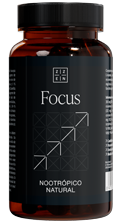
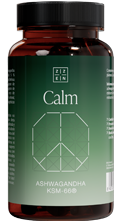
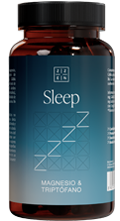
In this context, well-formulated natural nootropics are nothing more than a logical extension of micronutrition applied to cognitive performance. At ZZEN Labs, the three formulas —ZZEN Focus, ZZEN Sleep and ZZEN Calm— are designed with science-backed ingredients precisely to complement the micronutrients the brain needs most in each situation: sustained concentration, restorative rest or stress management.
Tip: If you suspect your diet doesn't cover all the micronutrients you need, the most useful thing is to keep a record of what you eat for a full week and check whether you daily consume leafy green vegetables, nuts, legumes, quality protein and varied fruits: that base covers most of your essential vitamin and mineral needs.
How to ensure an optimal micronutrient intake
The foundation will always be diet. A varied diet rich in natural foods, with special prominence given to fruits and vegetables of different colours (since different pigments correspond to different families of micronutrients), quality proteins and healthy fats, is the most solid strategy to cover daily needs.
However, there are situations in which diet alone may not be enough:
- Stages of high physiological demand: pregnancy, breastfeeding, growth in adolescents or recovery from illness.
- Dietary restrictions: vegans or vegetarians who may have a deficiency in vitamin B12, iron, zinc or omega-3.
- High chronic stress load or intense exercise: which increase the consumption of magnesium, B vitamins and antioxidants.
- Advanced age: with reduced intestinal absorption of several key micronutrients.
- Modern lifestyles with little time to cook and greater reliance on processed foods.
In these cases, smart supplementation, based on evidence, with adequate doses and bioavailable forms, becomes a valuable tool. Not to replace a good diet, but to help cover specific gaps when the daily routine makes it difficult.
The key is to choose quality products, with traceable ingredients and science-backed formulations. At ZZEN Labs, the focus is on clear formulas, traceable ingredients and honest communication about what each product is for.
Discover all ZZEN Labs' natural supplements
What to remember about essential micronutrients
Micronutrients aren't an optional add-on to nutrition: they are its backbone. Without a sufficient intake of vitamins and minerals, the body can keep going for a while, but at a silent cost paid in the form of tiredness, reduced concentration, worse immunity and slower recovery.
Understanding what micronutrients are and how they work is the first step to taking control of your health from the root. The good news is that optimising your micronutrient intake doesn't require radical solutions: often, small adjustments in the diet combined with well-chosen supplements can help you feel and perform better day to day.
Discover ZZEN Essentials, ZZEN Labs' essential supplement pack
Do you need help with anything?
If you have any questions about anything you've seen, please contact our friendly support team.
Chat nowUnlock your discount
Subscribe and get your exclusive discount code.