


Zinc and brain function: the essential mineral your mind needs to perform at its best
Table of contents
Zinc is much more than just a mineral. It is a fundamental structural component of the brain's communication channels, a modulator of neuronal excitability, and an essential cofactor in processes that determine your ability to learn, remember, and maintain concentration for hours.
If lately you feel that your memory isn't what it used to be, that you struggle to concentrate, or that your mind is constantly foggy, the problem might not be in your head. It could be in the absence of this critical mineral that most people overlook.
What zinc does in your brain
While many people talk about vitamins and omega-3 for brain health, zinc remains in the shadows despite being absolutely critical. Research from the CSIC has shown that zinc plays a relevant role in the neurotransmission of the nervous system, actively participating in the synthesis and release of neurotransmitters.
But its function goes much further. Zinc is not just a passive participant. It is an active modulator of neuronal excitability, which means it regulates when and how your neurons fire. It controls the volume of the conversation between your brain cells.
The brain contains some of the highest concentrations of zinc in the entire body, especially in the hippocampus, the region responsible for memory and learning. It is no coincidence. Zinc accumulates where it is most needed.
Zinc as a structural component of ion channels
This is where the story becomes fascinating. Researchers at the Salk Institute discovered that zinc is not simply a mineral floating in the brain waiting to be useful. It is an integral part of ion channels, the structures that regulate how nerve cells communicate with each other.
Potassium channels, crucial for neuronal function, contain four zinc atoms in specific positions. These zinc atoms surround the end of the channel that opens into the interior of the cell, acting as gatekeepers of neuronal communication.
What is extraordinary is that the amino acids that hold these zinc atoms are completely conserved across different types of channels. This means that over millions of years of evolution there has been selective pressure to keep that zinc exactly in place. Nature does not preserve anything without a critical reason.
When there is a zinc deficiency, these channels cannot function properly. It is like trying to make a lock work without the proper internal mechanisms. The key can go in, but it won't open the door.
Zinc and neurotransmission: the key to mental performance
Neurotransmitters are the messenger molecules that transfer information from one neuron to another. Without them, your brain would be a network of disconnected computers. And zinc is essential in this entire process.
Cellular receptors for neurotransmitters such as opioids, serotonin, dopamine, cannabinoids, and norepinephrine activate the production of nitric oxide to release the zinc that is "trapped" by specific proteins. This released zinc is temporarily used in critical cellular processes.
It is a fascinating cycle. Zinc is normally sequestered by proteins so it does not cause uncontrolled effects. When the right signal arrives, nitric oxide oxidizes these proteins, releasing the zinc. The zinc does its job. And then the proteins are returned to their original reduced state, ready to trap zinc again.
This "redox signaling" is fundamental for your brain to function properly. Without enough zinc, this whole system falls apart. Neurotransmitters cannot do their job efficiently. And you experience the symptoms: brain fog, lack of concentration, memory problems.
How zinc modulates neuronal plasticity
Neuronal plasticity is your brain's ability to change, adapt, and create new connections. It is what allows you to learn new things, remember experiences, and recover from brain injuries.
Zinc is essential for synaptic function and neuronal plasticity. Synapses are the microscopic spaces where neurons communicate with each other, and zinc regulates how strong or weak that communication is.
When you learn something new, certain neuronal connections strengthen. This strengthening requires structural changes at the molecular level. And zinc is directly involved in these changes. Without adequate zinc, your ability to form new memories and consolidate learning is severely compromised.
Studies have shown that low zinc levels are associated with cognitive decline, memory problems, and learning difficulties. It is not just correlation. It is direct causation.
Cognitive benefits of zinc backed by science
The benefits of zinc for the brain are not theory. They are backed by solid research and consistent clinical observations.
Improved memory and learning
Zinc is fundamental for memory consolidation. Studies show that zinc supplementation can improve learning in malnourished children and enhance memory function in adults with deficiency.
The hippocampus, the most important brain structure for memory, has exceptionally high concentrations of zinc. When these levels drop, the formation of new memories becomes significantly more difficult.
Protection against cognitive decline
Zinc deficiency has been linked to increased risk of dementia and accelerated cognitive decline in older people. Zinc acts as a brain antioxidant, protecting neurons from the oxidative damage that accumulates with age.
Maintaining optimal zinc levels could be a simple but powerful preventive strategy against age-related cognitive decline.
Mood regulation
Zinc participates in the synthesis of serotonin and dopamine, neurotransmitters crucial for mood. Low zinc levels have been associated with depression, anxiety, and irritability.
Some studies suggest that zinc supplementation can have antidepressant effects, especially when combined with conventional treatments.
Improved attention and concentration
Zinc is essential for the function of dopamine receptors, the most important neurotransmitter for attention and concentration. Zinc deficiency has been linked to ADHD and concentration difficulties in both children and adults.
Zinc supplementation has shown promising results in improving ADHD symptoms, although more research is needed to establish specific protocols.
Symptoms of zinc deficiency in the brain
The problem with zinc deficiency is that it can be subtle at first. There is no alarm that goes off saying "you're lacking zinc." But there are signs you can recognize if you know what to look for.
Brain fog is one of the first symptoms. That feeling that your thinking is wrapped in cotton, that you need more time than usual to process basic information. It's not exactly tiredness. It's as if your brain were running at half speed.
Memory problems are also common. You forget where you left the keys, you don't remember names of people you just met, you lose the thread of conversations. Small slips that individually don't seem important but together signal something deeper.
Difficulty concentrating is another indicator. You sit down to work or study and within five minutes your mind is already somewhere else. It's not a lack of willpower. It's that your brain literally doesn't have the biochemical resources to sustain attention.
Mood swings, irritability for no apparent reason, the feeling of being mentally fatigued even after sleeping well. All of this can be related to suboptimal zinc levels.
And here's the worrying part: these deficiencies can go unnoticed for years. You get used to functioning below your real capacity. You think that's just how your mind is, when in reality it just needs the right mineral to shine again.
How much zinc your brain needs
Official recommendations vary according to age, sex, and physiological situation, but general figures are around 8-11 mg daily for adults. Women need 8 mg, men 11 mg. During pregnancy and lactation, the requirements increase.
But here is an important nuance. These are the minimum amounts to avoid clinical deficiency. They are not necessarily the optimal amounts for maximum cognitive performance.
Many brain nutrition experts suggest that optimal levels could be slightly higher, especially for people with high cognitive demand. Students during exam periods, professionals with mentally demanding jobs, older people concerned about maintaining mental sharpness.
It is also crucial to understand that not all the zinc you consume is absorbed. Bioavailability varies enormously depending on the source. Zinc from animal sources is absorbed much better than that from plant sources. The phytates present in cereals and legumes can significantly reduce absorption.
The best sources of zinc for mental performance
If you want to optimize your zinc levels naturally, meat, shellfish, and fish are your best allies. They are sources of highly bioavailable zinc, which means your body can efficiently absorb and use the mineral they contain.
Oysters are probably the most concentrated source of zinc in nature. A single oyster can contain more zinc than many people consume in an entire day. If you like shellfish, oysters are a powerful option.
Red meat, especially beef, is excellent. A 100-gram beef steak can provide between 4 and 8 mg of zinc, depending on the cut. Lamb is also a rich source.
Chicken and other poultry provide moderate amounts of zinc, although less than red meat. But they are still valuable sources, especially if you eat them regularly.
Fish, particularly species such as salmon, sardines, and tuna, provide zinc along with other important brain nutrients like omega-3. It's a winning combination for cognitive health.
For vegetarians and vegans, things get a little more complicated. Legumes, nuts, and seeds contain zinc, but they also contain phytates that reduce their absorption. Pumpkin seeds are particularly rich in zinc. Chickpeas, lentils, and beans also provide reasonable amounts.
The trick for vegetarians is to consume quantities above the standard recommendations and use techniques such as prolonged soaking or fermentation to reduce phytate content and improve absorption.
Zinc in supplements: when and how
Zinc supplementation may be necessary in certain cases. If you have a confirmed deficiency, if you follow a strict vegetarian diet, if you are a high-performance athlete, or if you have conditions that affect nutrient absorption, a supplement can be the most practical solution.
But not all zinc supplements are the same. The form matters. Zinc citrate and zinc picolinate have better bioavailability than zinc oxide, which is the cheapest form but less absorbable.
The dose is also critical. More is not always better. Very high doses of zinc (above 40 mg daily) can interfere with the absorption of copper, another essential mineral for brain function. The balance between zinc and copper is delicate and must be respected.
Ideally, take zinc with food to improve absorption and reduce possible stomach discomfort. Avoid taking it together with coffee or tea, as they can reduce its absorption. At ZZEN Labs we have included it in the perfect dose in our nootropic for concentration and memory so that every day you can take your zinc dose effortlessly.
And of course, if you are considering supplementation, consult with a health professional. A blood test can determine if you really have a deficiency and how much you need to supplement.
The optimal combination for cognitive performance
Zinc does not work alone. It functions best when combined with other nutrients that support brain function. It is part of a team, not a lone player.
B-complex vitamins, especially B6, B9, and B12, work in synergy with zinc to optimize neurotransmission and brain energy metabolism. B6 is a cofactor in multiple reactions involving zinc.
Magnesium is another crucial mineral that complements the action of zinc. While zinc modulates neuronal excitability, magnesium helps prevent overstimulation of the nervous system. Together they create a perfect balance.
Omega-3 fatty acids, especially DHA, are structural components of neuronal membranes where zinc performs many of its functions. A healthy neuronal membrane with optimal zinc levels is the recipe for a brain that works at maximum capacity.
Antioxidants such as vitamin E and vitamin C protect both zinc and brain structures from oxidative damage. They work as a team to keep your brain young and agile.
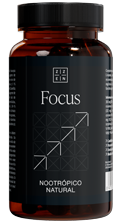
This is why well-designed nootropic formulas, such as ZZEN Focus, include zinc along with these other essential nutrients. It is not about mega-doses of a single component, but about providing all the cofactors the brain needs to function optimally.
ZZEN Focus contains 10 mg of zinc in its daily dose of 2 capsules, precisely the amount that perfectly complements the rest of the formula without creating imbalances. Combined with vitamins B6, B9, and B12, adaptogens such as Rhodiola and Bacopa, and the synergy of caffeine with L-theanine, it creates a biochemical environment where your brain can perform at its best.
The decision is in your hands
You can keep functioning below your real capacity, attributing brain fog to age or stress. Or you can take concrete measures to give your brain what it needs.
Zinc is not optional for optimal brain function. It is essential. The question is not whether you need it, but whether you are consuming enough from the right sources.
Review your diet. Do you regularly include highly bioavailable zinc sources? Or are you limiting yourself to plant sources with low absorption? Do you drink coffee or tea that may be interfering with the absorption of the little zinc you consume?
If you identify signs of deficiency, take action. Adjust your diet, consider smart supplementation, and give your brain the tools it needs to build and maintain the neuronal connections that determine your ability to think, learn, and remember.
The science is clear. Zinc is a structural component of the brain's communication channels. It is essential for neurotransmission. It modulates neuronal plasticity. It protects against cognitive decline.
It is not a magic ingredient that will turn you into a genius overnight. But it is a fundamental mineral that, when kept at optimal levels, allows your brain to function as it was designed to function.
And that difference between functioning at 60% and functioning at 100% can be what separates a life of mental mediocrity from a life of clarity, concentration, and exceptional cognitive performance.
Do you need help with anything?
If you have any questions about anything you've seen, please contact our friendly support team.
Chat nowUnlock your discount
Subscribe and get your exclusive discount code.